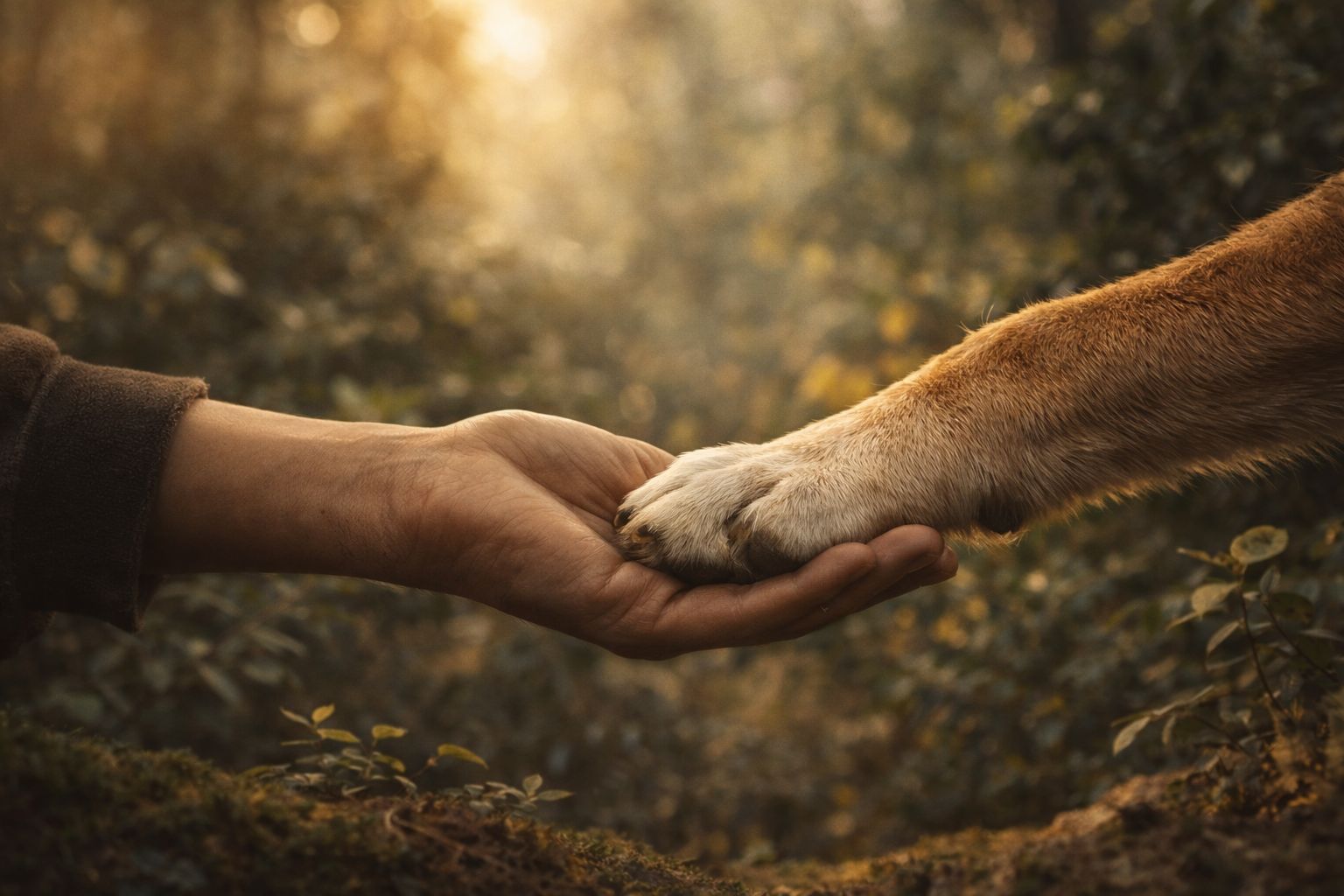
Few words in Scripture have been more misunderstood, or more consequentially misapplied, than dominion.
“Let them have dominion over the fish of the sea, and over the birds of the air, and over every living thing…” (Genesis 1:26).
Read superficially, this appears to authorize control—perhaps even exploitation. It situates humanity above the rest of creation and grants a kind of license over it.
And historically, this is how it has often been interpreted.
But dominion, in the biblical sense, is not ownership.
It is participation in governance.
The model is not the tyrant, but the king—and more specifically, the just king. One whose authority is measured not by what he can extract, but by what he sustains.
Aquinas is again instructive here. Humanity’s superiority lies not in the right to dominate arbitrarily, but in the capacity to order—to bring reason into relation with the rest of creation. This includes animals, not as mere instruments, but as beings within that order.
The problem is not dominion itself.
It is its distortion.
When dominion is severed from responsibility, it collapses into consumption. Animals become units of production, their value determined by efficiency rather than by the fact of their being.
And yet, an overcorrection is equally problematic.
To deny any distinction between human and animal—to collapse all hierarchy—is to erase the very structure that allows for responsibility in the first place. If we are not uniquely capable of moral reasoning, then we are not uniquely accountable.
The challenge, then, is not to abandon dominion, but to recover it.
To understand it as a form of stewardship that is neither sentimental nor exploitative.
Animals are not persons.
But they are not objects.
They exist within a moral field that we inhabit more consciously than they do—and for that reason, we bear a responsibility that they do not.
Dominion, properly understood, is not a permission.
It is a burden.